10 Guitar Pedals That All Guitar Players Must Have On Their Gear
Every guitarist eventually hits the same question: “Which pedals do I actually need?” With endless options on the market, it’s easy to fall into the trap of collecting gear instead of building a functional setup.
The truth is, most professional guitar tones come from a small group of essential pedals, not a massive board. The best rigs are not the biggest ones; they’re the most intentional ones.
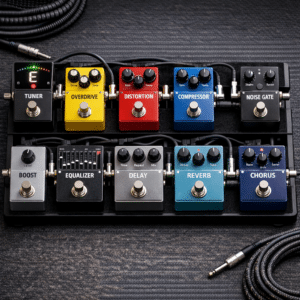
In this guide, we’ll break down 10 essential guitar pedals that form the foundation of almost any professional setup. These are not “trend” pedals, they are practical tools that shape tone, control dynamics, and unlock versatility in real playing situations.
1. Tuner Pedal: The Most Underrated Essential
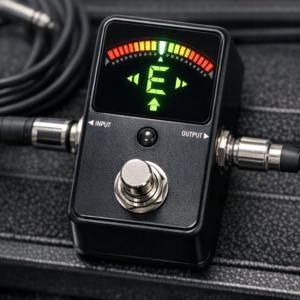
It might not be exciting, but a tuner pedal is the foundation of every serious rig.
A good tuner:
- Keeps you in perfect pitch on stage
- Mutes your signal for silent tuning
- Ensures consistency in recording sessions
Even the best tone in the world falls apart if you’re slightly out of tune. In professional environments, this is non-negotiable.
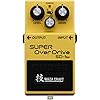
2. Overdrive Pedal: The Core of Guitar Tone
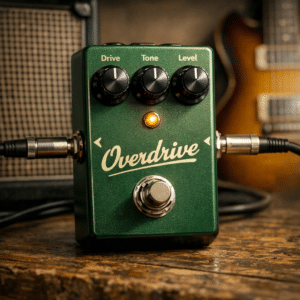
Overdrive is the heart of most guitar sounds, especially in rock, blues, and modern pop.
A good overdrive:
- Adds harmonic richness
- Pushes your amp naturally
- Enhances pick attack and dynamics
Unlike distortion, overdrive preserves your guitar’s natural character while adding controlled saturation.
Many players use overdrive not just for gain, but as a tone-shaping tool even on clean settings.
3. Distortion Pedal: For High-Gain Control
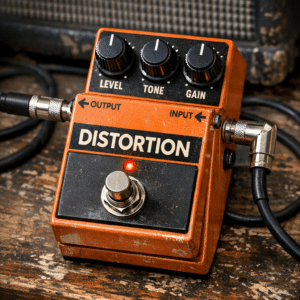
When you need more aggression and sustain, distortion pedals take over.
They provide:
- Heavier saturation than overdrive
- Tight rhythm control for modern styles
- Consistent high-gain tone at any volume
Distortion is essential for rock, metal, and modern lead tones where clarity under gain matters.
4. Compressor Pedal: The Secret to Even Tone
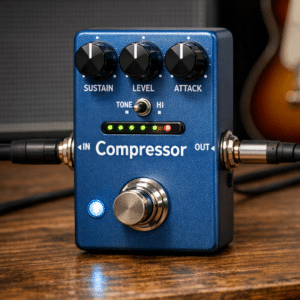
A compressor evens out your dynamics and makes your playing more controlled.
It helps with:
- Smooth sustain on clean tones
- Consistent volume between notes
- Better note clarity in fast passages
Used subtly, compression makes your guitar feel more “produced” without sounding unnatural.
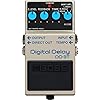
5. Delay Pedal: Space and Depth
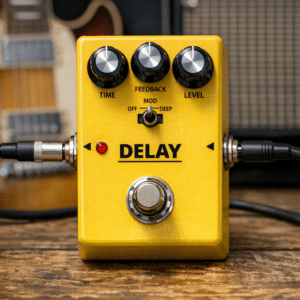
Delay adds dimension to your sound by repeating your signal over time.
It is used for:
- Creating ambient textures
- Thickening lead guitar lines
- Adding rhythmic complexity
From subtle slapback to long ambient repeats, delay is one of the most creative tools in guitar production.
6. Reverb Pedal: Natural or Artificial Space
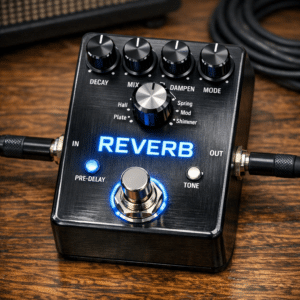
Reverb simulates the sound of playing in a physical space.
It helps to:
- Add depth and atmosphere
- Soften dry, direct tones
- Blend guitar into a mix more naturally
Without reverb, guitar tones often feel too close and unnatural in modern production contexts.
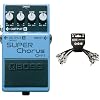
7. Chorus Pedal: Width and Movement
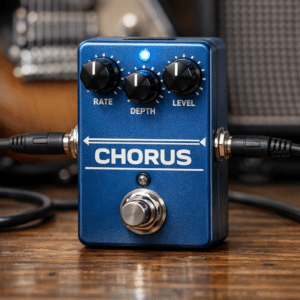
Chorus thickens your tone by slightly detuning and delaying the signal.
It is commonly used for:
- Clean guitar shimmer
- 80s-style textures
- Wide stereo rhythm sounds
Chorus adds motion and width without overpowering your core tone.
8. EQ Pedal: Tone Control at Your Feet
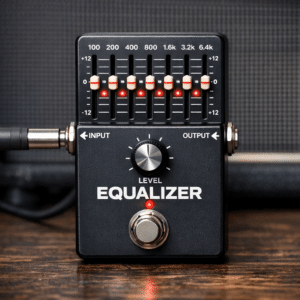
An EQ pedal gives you precise control over frequency shaping.
It allows you to:
- Cut mud or harsh frequencies
- Boost presence for solos
- Adapt tone to different rooms or amps
This is one of the most powerful yet underused tools in guitar rigs.
9. Noise Gate: Clean High-Gain Performance
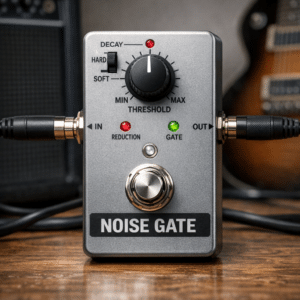
A noise gate removes unwanted noise from high-gain setups.
It helps to:
- Eliminate hum and hiss
- Tighten palm-muted riffs
- Improve clarity in distortion-heavy tones
Especially in modern metal and high-gain styles, a noise gate is essential for clean performance.
10. Boost Pedal: The Secret Weapon for Leads
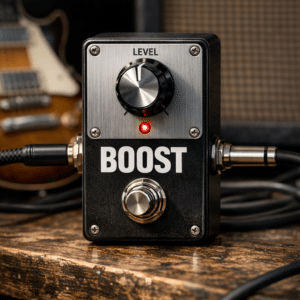
A boost pedal increases signal level without changing tone drastically.
It is used for:
- Pushing solos forward in a mix
- Tightening amp response
- Adding punch without extra distortion
Many professional players use boost pedals to control dynamics rather than increase gain.
How These Pedals Work Together
The real power of these pedals is not in isolation, it’s in combination.
A typical professional setup might look like:
- Tuner → Compressor → Overdrive → Distortion → EQ → Modulation → Delay → Reverb
But there is no single “correct” order. The best signal chain depends on your style, genre, and tone goals.
What matters most is not quantity, it’s intentionality.
Conclusion
A professional guitar tone does not come from owning every pedal on the market. It comes from understanding which tools actually matter and how they interact with your playing style.
These 10 pedals form the foundation of almost every versatile and professional guitar setup. Once you understand their roles, you can build a rig that is not only powerful, but also controlled, expressive, and mix-ready.
In the end, great tone is not about more gear, it’s about the right gear used with purpose.
Enjoyed this article? Continue your guitar evolution by reading our next guide:
[Why Two Identical Guitars Can Sound Completely Different]