Top 7 Best Acoustic Guitars for Beginner to Advanced Players
Choosing the right acoustic guitar can feel a little like walking into a guitar store and being attacked by a wall of wood, strings, and price tags.
You’ve got dreadnoughts, jumbos, grand auditoriums, mahogany tops, solid tops, laminate backs, electronics, cutaways, gig bags, hard cases… and somewhere in the middle of all that, you’re just trying to find a guitar that sounds good and feels right in your hands.
The good news? Whether you’re buying your first acoustic or upgrading to something stage-ready, there are excellent options out there for every level.
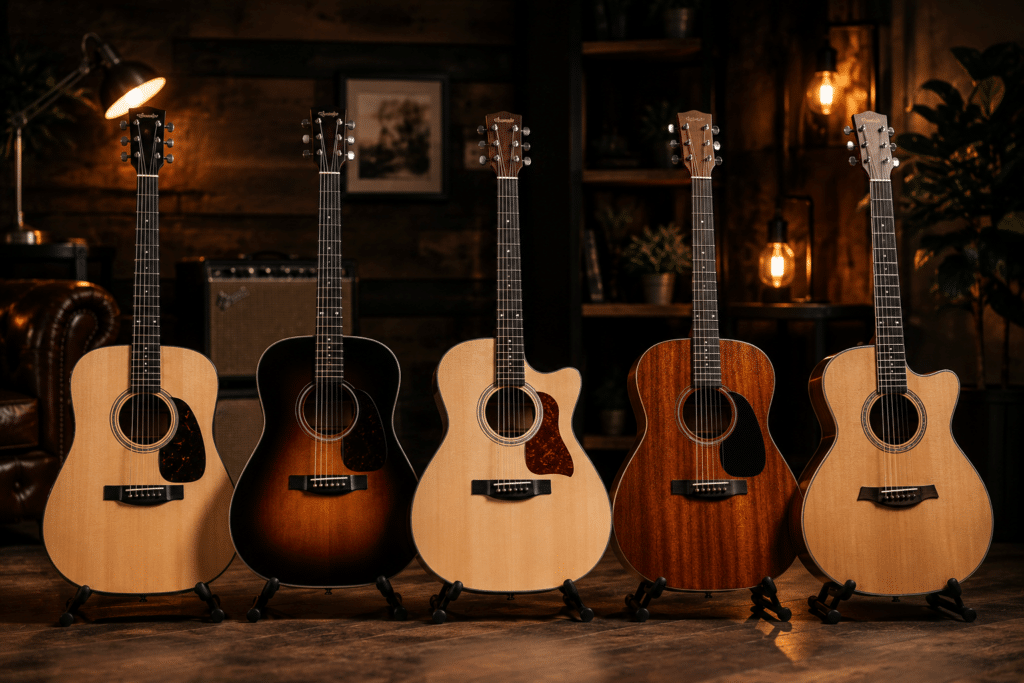
In this guide, we’ll look at 7 of the best acoustic guitars for beginner to advanced players, including compact travel guitars, dependable beginner bundles, powerful jumbo acoustics, and professional-level models from Taylor and Martin.
1. Traveler Mini Dreadnought Mahogany with Gig Bag
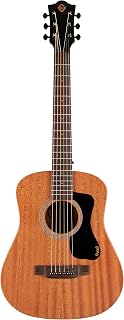
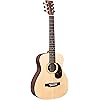
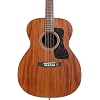
The Traveler Mini Dreadnought Mahogany is a great choice if you want a smaller acoustic guitar that’s easy to carry, comfortable to play, and still has that familiar dreadnought-style feel.
Because it’s a mini dreadnought, it won’t have the same huge low-end boom as a full-size acoustic. But that’s not a bad thing. Smaller guitars are often easier for beginners, younger players, or anyone who wants something couch-friendly and travel-ready.
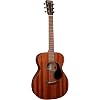
The mahogany look also gives it a warm, earthy vibe. Mahogany-style acoustics usually lean toward a slightly warmer and woodier sound, which works nicely for strumming, fingerpicking, and casual practice.
Why it’s great:
- Compact and easy to travel with
- Comfortable for beginners
- Includes a gig bag
- Warm mahogany-style tone
- Great for practice, camping, and songwriting
Best for: Beginners, and players who want a portable acoustic.
2. Fender CD-60S Solid Top Dreadnought Acoustic Guitar Bundle
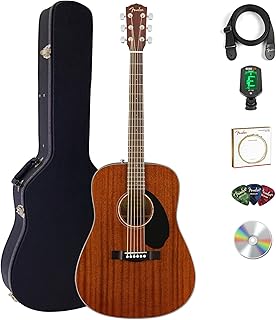
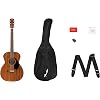
The Fender CD-60S Solid Top Dreadnought Acoustic Guitar is one of the best beginner-friendly acoustics because it gives you something very important: a solid top.
A solid top generally resonates better than a laminate top, meaning the guitar can sound richer, more open, and more responsive as you play. For beginners, that matters because a better-sounding guitar can make practice more rewarding.
This bundle is especially useful because it includes a hard case, tuner, and strap. If you’re just starting out, those extras save you from having to buy everything separately.
Why it’s great:
- Solid top for better resonance
- Classic dreadnought body shape
- All-mahogany look and warm tone
- Includes useful accessories
- Strong value for beginners and intermediate players
Best for: Beginners who want a serious starter acoustic with a complete bundle.
3. F-240E Jumbo Acoustic-Electric Guitar Natural
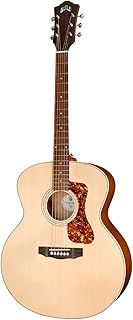
The F-240E Jumbo Acoustic-Electric Guitar is for players who want a bigger sound and a bigger body.
A jumbo acoustic typically produces strong volume, deep bass, and a wide, full tone. If a dreadnought is already bold, a jumbo takes that idea and makes it even larger. It’s the kind of acoustic that fills a room easily.
The “E” in the name means it has built-in electronics, so you can plug it into an amp, PA system, or audio interface. That makes it useful for live performances, open mics, church playing, or recording demos at home.
Why it’s great:
- Big jumbo body sound
- Built-in electronics
- Natural finish
- Strong for strumming and rhythm guitar
- Great stage-friendly option
Best for: Intermediate players, performers, and strummers who want a huge acoustic voice.
If you mostly play soft fingerstyle, a jumbo might feel like a lot of guitar. But if you love big open chords, strong rhythm playing, and singer-songwriter energy, this can be a very satisfying instrument.
Picture big choruses, open chords, and a capo on the second fret. That’s where jumbo acoustics shine.
4. Taylor 114ce Grand Auditorium Acoustic-Electric Guitar
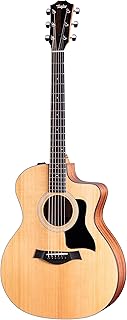
The Taylor 114ce is one of the best “step-up” acoustic guitars for players who want something more refined without jumping straight into premium pricing.
Taylor guitars are known for being comfortable, clear, and easy to play. The Grand Auditorium body shape is one of Taylor’s most popular designs because it sits nicely between a dreadnought and a smaller concert-style guitar.
That means the 114ce can handle both strumming and fingerpicking well. It has enough body to sound full, but it doesn’t feel as bulky as some large dreadnoughts or jumbo guitars.
The “ce” means cutaway electric. The cutaway helps you reach higher frets, and the electronics let you plug in for live playing.
Why it’s great:
- Comfortable Grand Auditorium body
- Clear Taylor-style tone
- Built-in electronics
- Cutaway for upper-fret access
- Excellent for intermediate players
Best for: Players upgrading from their first acoustic.
The Taylor 114ce is great if you play a mix of styles. You can strum worship songs, fingerpick folk patterns, play pop covers, or plug into a PA for small gigs.
5. Taylor 214ce Plus Acoustic-Electric Guitar , Natural
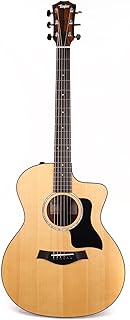
The Taylor 214ce Plus takes the Grand Auditorium formula and gives it a more premium feel.
Compared to the 114ce, the 214ce Plus usually offers upgraded appointments, a polished look, and a more refined playing experience. It’s still versatile and comfortable, but it feels a little more “serious” in your hands.
This is the kind of acoustic-electric guitar that works beautifully for players who perform, record, or simply want an instrument that inspires them every time they pick it up.
The tone is typically bright, clear, and balanced. If you like your chords to sound detailed and articulate instead of overly boomy, this guitar is worth serious attention.
Why it’s great:
- Premium Grand Auditorium feel
- Excellent plugged-in performance
- Balanced tone for many styles
- Comfortable neck and cutaway
- Great for serious intermediate to advanced players
Best for: Gigging musicians, recording players, and committed acoustic guitarists.
6. Martin D-X1E Mahogany Acoustic-Electric Guitar , Figured Mahogany
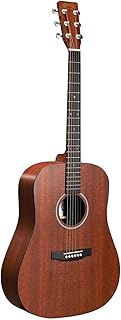
The Martin D-X1E Mahogany is a smart choice for players who want that Martin dreadnought character in a more affordable and practical package.
Martin is legendary in the acoustic guitar world. When people talk about classic acoustic tone, Martin is almost always part of the conversation. The D-X1E gives players access to that heritage without requiring a professional-level budget.
Its dreadnought body gives you strong projection and a familiar acoustic feel. The figured mahogany look gives it a rich visual style, while the built-in electronics make it stage-ready.
Why it’s great:
- Martin dreadnought design
- Built-in electronics
- Great for strumming and flatpicking
- Durable and practical construction
- Strong option for working players on a budget
Best for: Intermediate players who want a reliable Martin acoustic-electric.
This guitar is great for players who like folk, country, rock, worship, and acoustic blues. If you’re a rhythm-heavy player who wants a guitar that can support your voice, the D-X1E is a strong contender.
7. Martin D-15M with Gig Bag
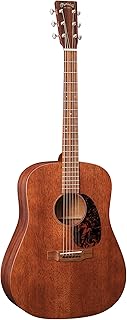
The Martin D-15M is the most advanced and professional-feeling guitar on this list. It’s built for the working musician who wants a warm, simple, no-nonsense acoustic that sounds better the more you play it.
This guitar features mahogany construction and a satin finish, giving it a dry, woody, warm tone that many players absolutely love. It’s not flashy. It doesn’t need to be. The D-15M is the kind of guitar that wins you over with feel, tone, and honesty.
Mahogany acoustics often have a strong midrange and a focused voice. That makes the D-15M excellent for blues, folk, Americana, singer-songwriter music, and recording.
Why it’s great:
- All-mahogany Martin tone
- Warm, woody sound
- Professional-level build
- Satin finish feels smooth and natural
- Excellent for recording and songwriting
Best for: Advanced players, serious songwriters, and working musicians.
How to Choose the Best Acoustic Guitar for Your Level
Before you choose, think about where you are in your guitar journey.
For Beginners
Look for comfort, tuning stability, and value. A bundle like the Fender CD-60S is a great choice because it includes the extras you need.
For Travelers and Casual Players
A smaller guitar like the Traveler Mini Dreadnought Mahogany makes practice easier because you can take it almost anywhere.
For Intermediate Players
The Taylor 114ce, F-240E Jumbo, and Martin D-X1E are great step-up guitars because they offer better tone, better feel, and stage-ready features.
For Advanced Players
The Taylor 214ce Plus and Martin D-15M are excellent choices if you want a guitar that can handle gigs, recording, and years of serious playing.
Acoustic-Electric or Pure Acoustic: Which One Do You Need?
If you only play at home, a regular acoustic guitar is totally fine.
But if you plan to perform live, play at church, record directly, or join open mics, an acoustic-electric guitar is very useful. Models like the Taylor 114ce, Taylor 214ce Plus, Martin D-X1E, and F-240E Jumbo let you plug in without needing to place a microphone in front of the guitar.
That said, don’t buy electronics just because they sound fancy. If the guitar itself doesn’t feel good unplugged, move on. The acoustic tone should still inspire you before you ever plug in.
Conclusion: Find the Acoustic That Makes You Want to Play More
The best acoustic guitar is not always the most expensive one. It’s the one that fits your hands, your music, and your life.
If you’re just getting started, the Traveler Mini Dreadnought Mahogany and Fender CD-60S Bundle are friendly, practical choices. If you want something bigger and stage-ready, the F-240E Jumbo and Martin D-X1E bring strong acoustic-electric value. For players ready to upgrade, the Taylor 114ce and Taylor 214ce Plus offer comfort, clarity, and versatility. And if you want a warm, professional acoustic built for serious songwriting, the Martin D-15M is a beautiful long-term choice.
Whatever you choose, remember this: a good acoustic guitar should make you want to sit down, play one chord, and then accidentally lose an hour.
Have you played any of these acoustic guitars? Share your experience in the comments , and if you’re still building your setup, check out our guide to the best acoustic guitar accessories every player needs next.
Enjoyed this article? Continue your guitar evolution by reading our next guide:
7 Best Electric Guitars for Beginners Under $400